Real-time dispatch for block-cave production.
BCD Dispatch coordinates LHD fleets across drawpoints in real time. Six user roles run on one platform: dispatchers, supervisors, planners, operators, maintenance and management. It runs 24/7. We built it with Graybeard Solutions.
What we built
BCD Dispatch is a complete real-time dispatch and production management platform. We built it from the ground up around the specific demands of block-cave mining at Palabora Mining Company. It coordinates underground LHD fleets against draw-card targets shift by shift, drawpoint by drawpoint. The platform exists to protect ore recovery. Every dispatcher decision is logged, every load is measured against plan, and every drawpoint stays within its even-draw envelope.
-
Real-time dispatch
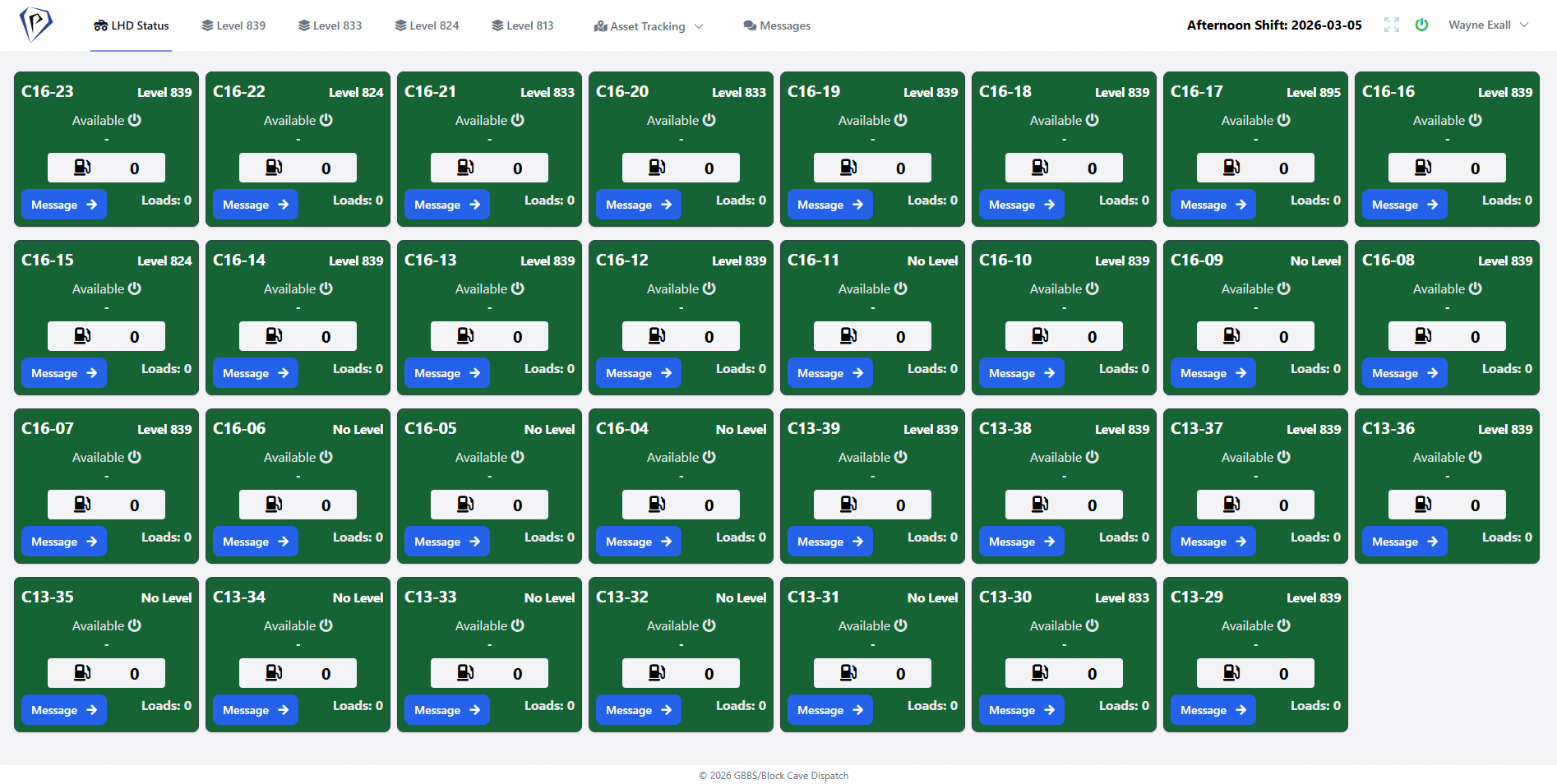
Dispatchers assign LHDs to drawpoints and see every machine in the fleet at a glance: Available, Assigned, Breakdown, or Standby. Assignments travel through MQTT to the operator's HMI underground within seconds, and load confirmations flow back in real time. Every status change is logged with a full audit trail.
-
Draw control
Mine planners upload draw cards that define target tonnage for every drawpoint, every shift. Dispatchers see those targets alongside real-time progress as ore is extracted. Even-draw compliance is visible at all times. The ore body collapses evenly only when the plan is followed.
-
Production reporting
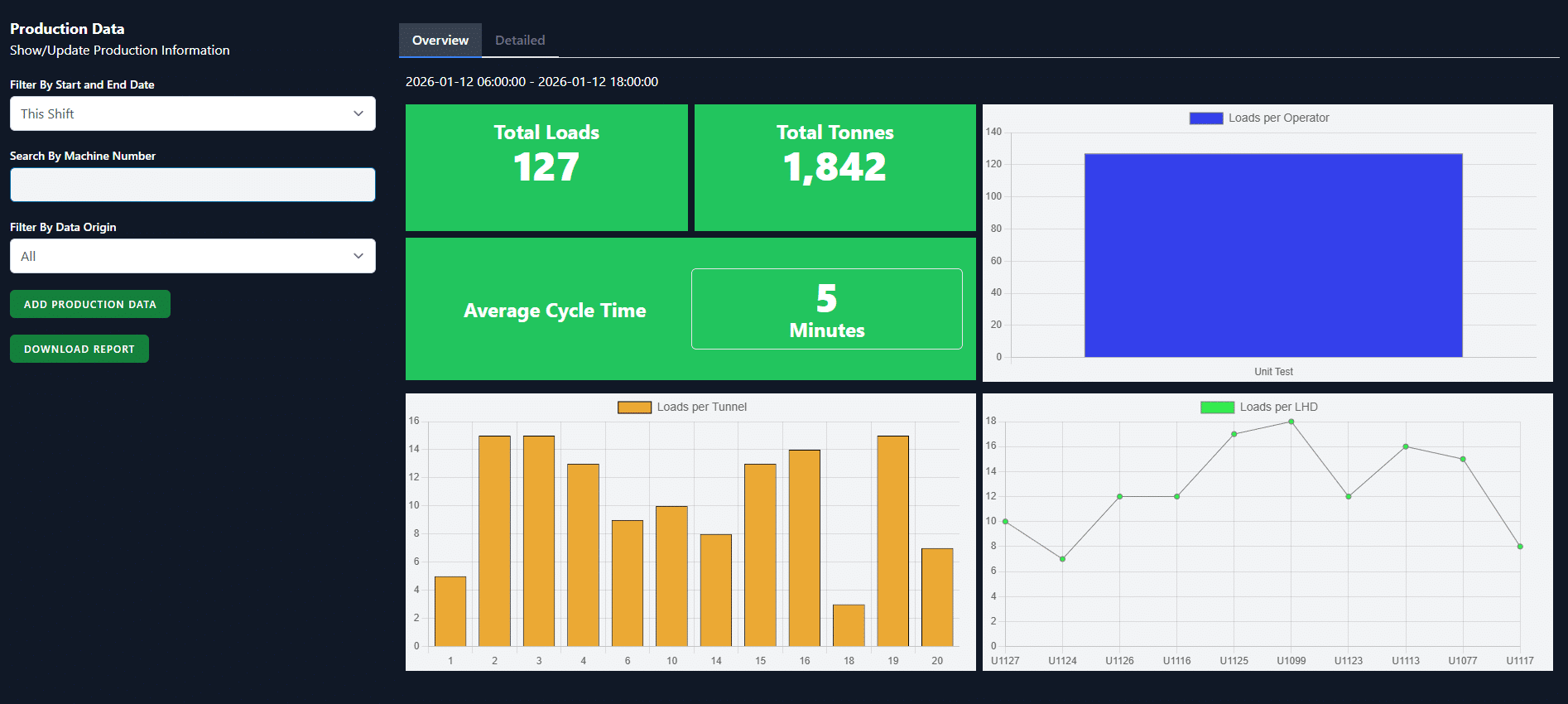
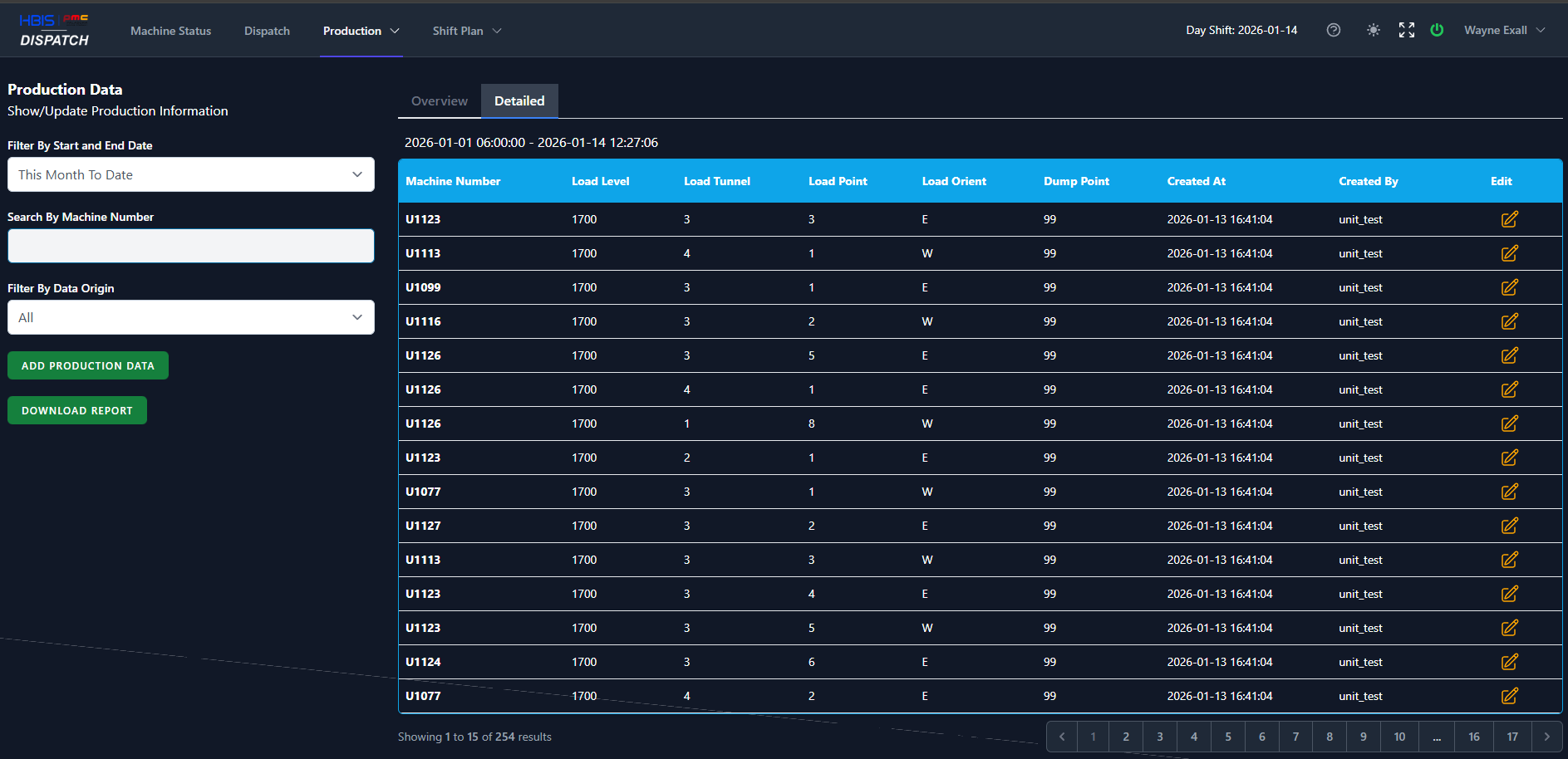
Load data flows in automatically from underground equipment, and production can be viewed by machine, tunnel, shift, or operator. PDF reports cover machine status, production summaries, shift performance and equipment breakdowns. They are generated server-side and emailed automatically to configurable mailing lists.
-
Mine-map visualisation
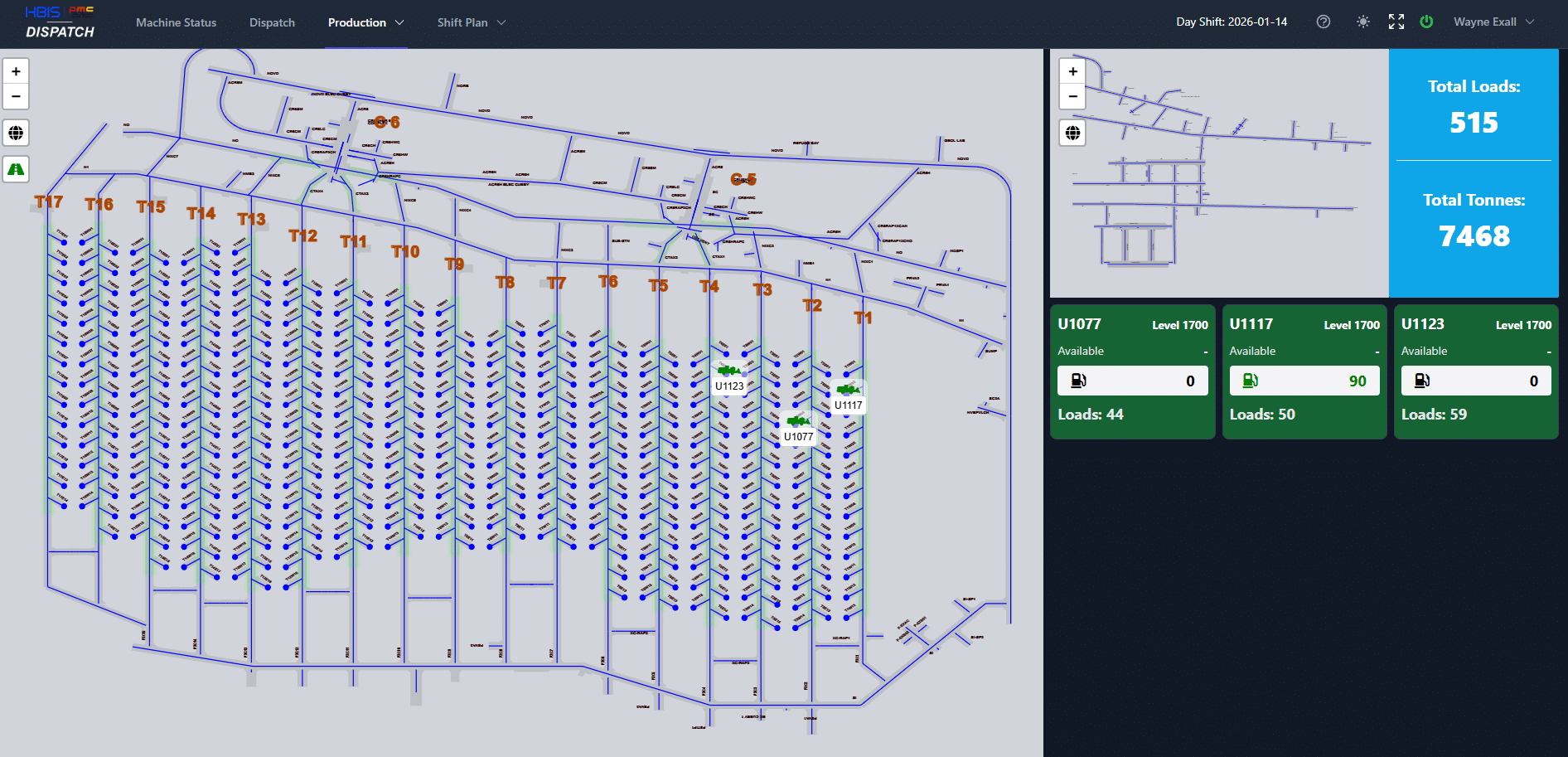
Custom SVG-based mine maps show the layout with draggable drawpoints and tip positions; asset-tracking views display live equipment positions updated via MQTT. Chart.js powers the KPI visualisations. The whole platform installs as a Progressive Web App on tablets and mobile, so operators and supervisors carry it underground.
-
Hardware integration
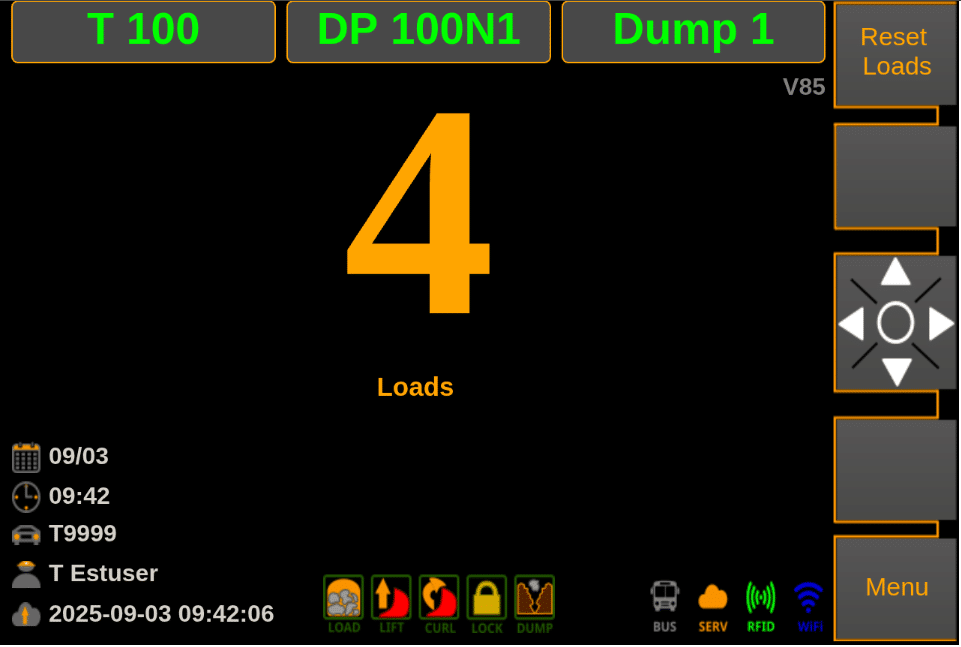
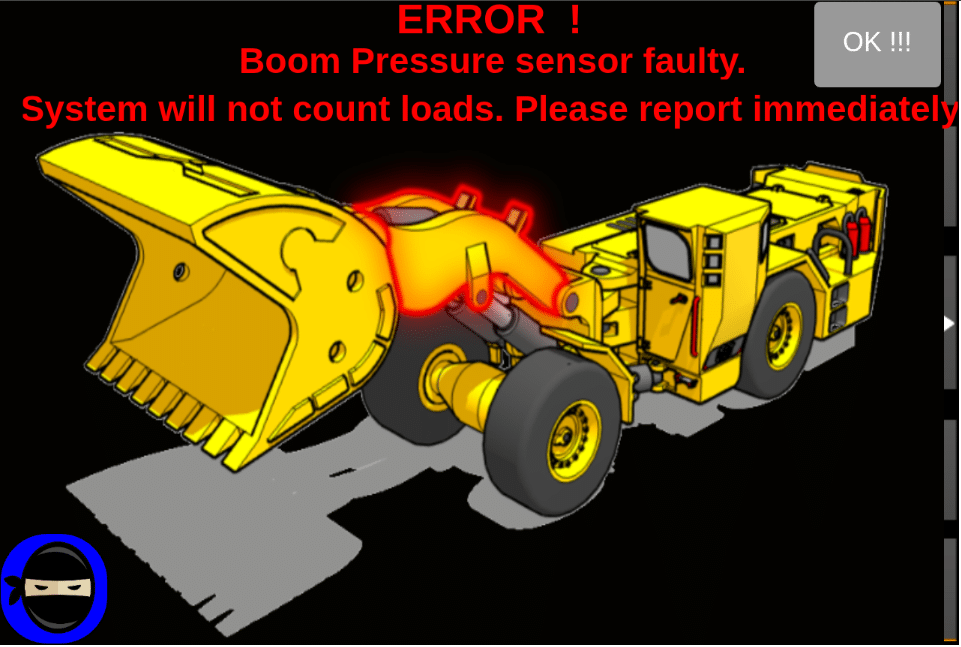
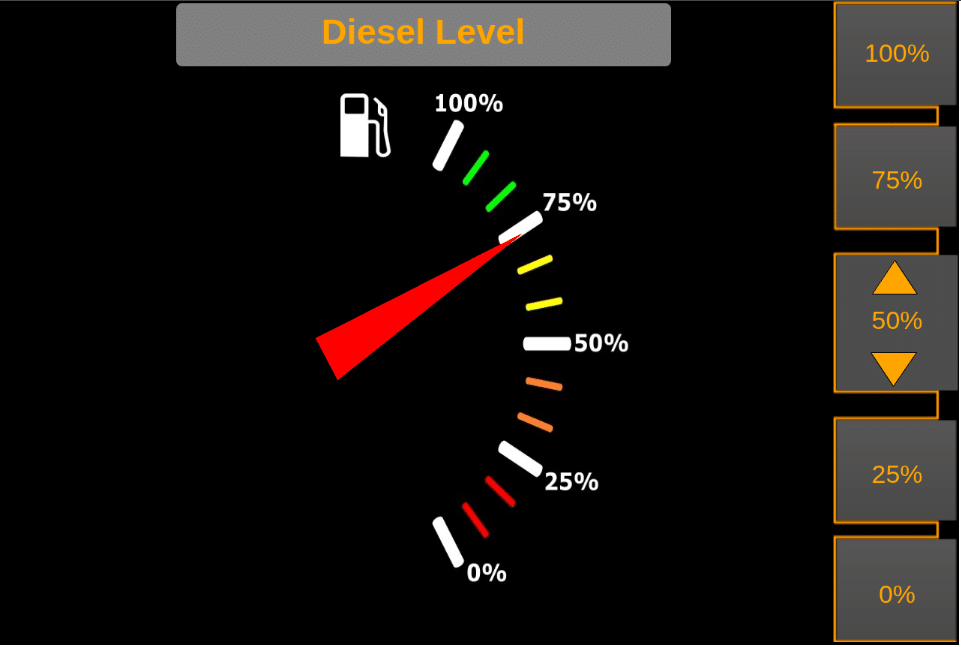
A two-way MQTT-over-SSL data flow links the dispatch platform to underground LHDs. Hydraulic sensors detect bucket tilt and boom lift to confirm loads automatically. RFID readers throughout the tunnels confirm position. IFM HMI touchscreen panels in the LHD cabs are the operator's interface. The on-machine hardware and HMI work was delivered by Graybeard Solutions.
-
Audit + handover
Every assignment, status change, load record, and message is captured with user, timestamp, and reason. Production delays are logged with categorised reasons, machine, location, and duration. Shift boundaries are respected throughout. Incoming dispatchers see exactly where the outgoing shift left off.
Outcomes
Block cave
Mining method
6 user roles
One platform
24/7/365
Coverage
Common questions
What is block-cave mining and why does dispatch matter?
How does the system track production in real time?
What stack runs in production?
How is the partnership with Graybeard Solutions structured?
Who uses the platform inside the mine?
How is the audit trail handled?
Stack & partnership
We designed and built the dispatch management platform: the web application, the data layer, the dispatch logic, the dashboards, and the reporting. The stack is Laravel 12 with Livewire 3, PostgreSQL in production, MQTT over SSL for real-time messaging, a Progressive Web App for installable mobile and tablet access, Chart.js for visualisations, and server-side PDF generation. One codebase, one platform, serving six user roles.
Hardware integration, MQTT broker infrastructure, and the IFM HMI panels in LHD cabs were delivered by Graybeard Solutions. Equal-partner delivery.
Block-cave dispatch is unforgiving. Uneven draw rates can strand 15 to 25 percent of total ore permanently in dead zones where it can never be recovered. Overdrawing a single point can pull waste rock into the ore stream and reduce grade by 20 to 40 percent. In the worst cases, uncontrolled caving causes stress redistribution that crushes extraction tunnels, destroying infrastructure worth tens of millions of rand. The most dangerous consequence is an air blast caused by sudden void collapse, and that can be lethal. These are the stakes the system addresses, one drawpoint at a time.
Want this capability built for your operation? See Mining Dispatch Systems →